
Uncategorized
Amed and Tulamben Dive Tourism Investment Trends 2027
· August 6, 2026 · 9 min
Story — Uncategorized
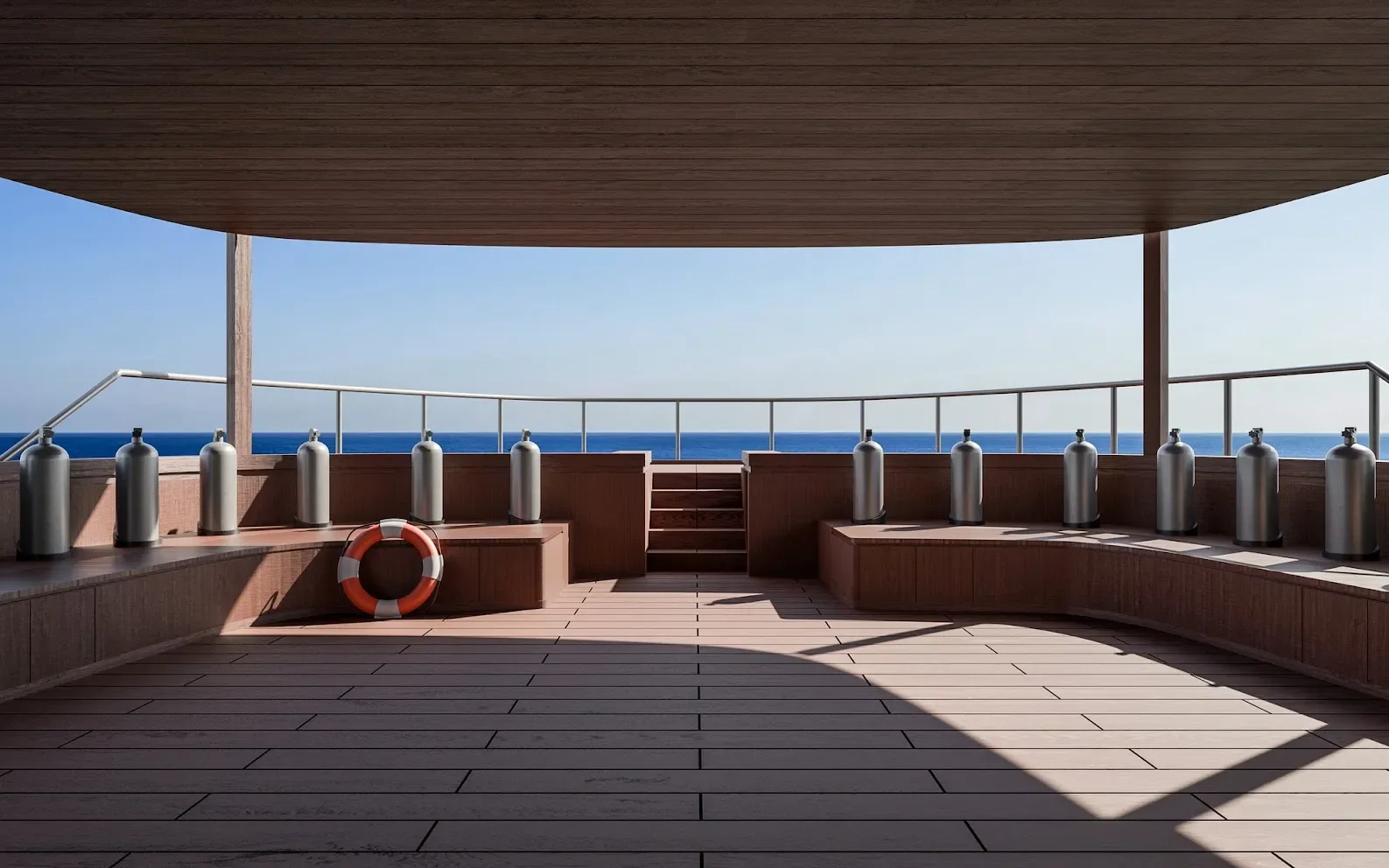
Amed and Tulamben trade on one asset that no marketing budget can replicate: shore-accessible diving, including the shallow wreck of the USAT Liberty at Tulamben, which divers can reach by walking in from the beach rather than chartering a boat. That single feature sets the entire investment logic of this coastline — lower operating capital than boat-based dive destinations, a year-round guest flow, and property values tied to walking distance from the water entry points.
What makes Amed and Tulamben a dive market rather than a beach market?
Amed is not one village but a string of fishing settlements along the northeast coast of Karangasem, with dark volcanic sand, steeply shelving bays and traditional outrigger canoes still working the water each morning. There is no wide white-sand resort beach here, and there never will be. What the coast offers instead is calm, clear water dropping quickly to diveable depth, a coral slope and wall system close to shore, and in Tulamben a wartime cargo wreck lying in shallow water a short swim from the stones. Guests come for the water, not for the sand, and that changes what an accommodation asset must deliver: gear storage, rinse tanks, drying space, early breakfasts, and a bed within a few minutes of the entry point matter far more than beach frontage aesthetics.
Why does shore-based diving change the investment maths?
Boat-based dive destinations require a vessel fleet, crew, mooring, fuel and maintenance before the first guest arrives. Shore diving removes most of that capital requirement, which is why the barrier to entry along this coast is comparatively low and why the operator landscape is dense with small independents. For an investor, the consequences are concrete: capital expenditure concentrates in rooms and dive infrastructure rather than in marine assets, revenue per guest is lower than in liveaboard markets but guest volume and length of stay are steadier, and differentiation has to come from service, instruction quality and proximity rather than from exclusive access. Buyers assessing Amed beachfront villas should measure the walk to the water in minutes before they measure the plot in square metres.
Who are the guests, and what do they actually buy?
Dive tourism revenue is layered, and the accommodation rate is often the smallest layer. A typical guest on this coast buys a bed, a multi-day dive package, equipment rental, and frequently a certification or specialty course, then adds transfers and meals. That layering is why an asset with a functioning dive operation attached behaves differently from a plain villa: the room is a channel for higher-margin activity revenue. The guest mix through this coastline generally spans entry-level certification students, holiday divers on multi-day packages, underwater photographers who return repeatedly to the same sites, freedivers drawn to deep water close to shore, and technical divers working the deeper profiles. Each segment has different length-of-stay and spend characteristics, and a property that serves all of them without focus tends to serve none of them well.
Which assets are transactable along this coast?
| Asset type | Revenue model | Key diligence point |
|---|---|---|
| Small dive resort with rooms | Beds plus dive packages, courses and rental | Whether the dive operation, licences and staff transfer with the sale |
| Beachfront villa or guesthouse | Accommodation only, partnered with local operators | Gear handling, rinse and storage space; distance to entry points |
| Tulamben hotel asset | High-volume, short-stay dive traffic | Parking, group logistics and water supply capacity |
| Undeveloped coastal plot | Build to suit | Zoning, coastal setback rules, road access and slope stability |
| Hillside plot with sea view | Premium rooms, lower dive convenience | Access gradient and guest transfer to the water |
Assets clustered around the wreck site carry the highest visitor density on this coast, and investors reviewing Tulamben hotel investment options should model the difference between a property that captures early-morning dive traffic and one that competes for the same guests from further along the road.
What are the operational and regulatory checkpoints?
Recreational diving is a safety-critical activity, and the credibility of an asset depends on the standards of the operation attached to it. Diligence should cover instructor and divemaster certification currency, equipment servicing records, compressor maintenance and air quality testing, emergency oxygen provision, the written emergency action plan, insurance cover for the operation and its staff, and the distance and route to the nearest hyperbaric treatment facility and hospital. On the property side, confirm the certificate and its history at the land office through a licensed notary, the zoning designation for accommodation use, coastal setback requirements, building approval matching actual use, and business licensing under Indonesia’s risk-based system. Foreign investors should confirm which title structures are available to them before negotiating. This is general information, not legal, tax or safety advice — verify current rules with the relevant Indonesian authorities and licensed professionals.
What are the honest risks through 2027?
The northeast coast sits close to Mount Agung, an active volcano whose eruption episodes have previously disrupted travel across Bali, including temporary airport closures. That is a documented regional risk, not a hypothetical one, and it belongs in any underwriting for this coastline as a scenario for a demand interruption rather than as a reason to avoid the market. Beyond volcanic activity, the material risks are reef condition and the water quality that underpins the entire product, single-site dependency where one wreck or one bay drives most visits, road access and travel time from the main airport in the south, freshwater supply in a comparatively dry region, and price competition from a fragmented field of small operators. Assets that survive downturns here tend to be those with low fixed costs, loyal repeat guests and an owner who can pause rather than one carrying heavy debt service.
Frequently asked questions
Is diving in Amed and Tulamben seasonal?
Diving runs year-round on this coast, which is one of its structural advantages over destinations with a hard closed season. Conditions still vary: the wetter months can bring reduced visibility and occasional runoff, and holiday periods concentrate arrivals. Practically, this means occupancy troughs here are shallower than in surf-driven or purely leisure destinations, but rates still need a seasonal calendar rather than a single flat price.
Do I need to run the dive operation myself to own a dive resort?
No. Many owners separate the property from the dive business, leasing the dive facility to a qualified operator or partnering with established local operators while running only the accommodation. That structure lowers your safety and licensing exposure but also transfers the highest-margin revenue to the operator. Whichever route you take, the arrangement should be documented in writing, with clear responsibility for safety standards, insurance and equipment.
How close to the water does a property need to be?
Close enough that a diver carrying equipment will walk it. On a shore-diving coast, convenience is the product, and each additional minute between the room and the entry point measurably weakens the offer for package divers. Hillside properties can still work, but they must compensate with views, comfort and a reliable shuttle, and they generally serve a different guest than the one booking three dives a day.
Can foreigners buy a beachfront dive resort here?
Foreign individuals cannot hold Indonesia’s freehold title. Foreign investment in hospitality assets is typically structured through a foreign-owned Indonesian company holding a building-rights title, or through leasehold arrangements. Coastal plots also carry setback and spatial-planning constraints that vary by location. Confirm the current structures, durations and coastal rules with the land office, the regional planning authority and a licensed notary before committing to a transaction.
Talk through a dive-coast acquisition
If you are evaluating a specific property in Amed, Tulamben or the surrounding bays, send the location, asking price and whether an operating dive business is included to our business desk on WhatsApp at https://wa.me/6281128590000 or by email at [email protected], and we will work through the site logic, the diligence list and the operating structure with you.
Related stories
 Understanding Leasehold Structures in North Bali 2027Leasehold in North Bali is a contractual right to use land and any building on it…
 Step-by-Step Freehold Villa Purchase Process 2027Buying a freehold villa in North Bali follows a defined sequence: verify the certificate and the…
 Singaraja Commercial Property Demand Outlook 2027Singaraja is the only genuinely urban commercial market in North Bali, and demand there is driven…